Dec

28

One thing I have been pondering over lately has been the idea of presence, digital presence that is.

By presence I mean, where am I? In front of my computer, on the phone, away from my computer eating lunch, in front of my VoIP phone, or on the mobile. You get the idea.

Lately, I have been using Twitter which offers a service for maintaining your presence sort of like changing the status of your IM accounts. You’ll notice I show my latest Twitter update at the top of my site now. I see a lot of potential in Twitter, but it needs to tie into other services.

I would like to be able to set my presence in one place (it has to be on the network and accessible via numerous methods) and have all my IM accounts respond, as well as have my VoIP account respond. Other services could be included, like XBox Live. I want to set my presence to something and tag it with a couple of predefined tags (online, away, etc). If I set my presence to away or offline, I want my services to respond. For example, all of my IM accounts would show me as away (rather than me having to update each of them individually, or use an aggregation client). Perhaps my Vonage VoIP account would then forward all calls to my mobile.

I don’t think one entity needs to own the data, but a standard of how the data is structured should be established. So if Microsoft wants to offer a presence account that is fine, so can Google etc… They would both provide interfaces for users, and would offer APIs for service providers (like Vonage, AIM, Google Talk) to use and update.

You can see why I like Twitter, they are already half there. If they could simply figure out a way to broadcast this info to set all of my IM account statuses, I would be overjoyed. If Vonage would jump on board and receive updates, I would pay more a month. I want one place to update all of my multiple services.

It’s not that complex of a problem technically. The structure could be XML, very easy and small. The APIs wouldn’t be that hard to create. The database is fairly easy to structure. Scale would be a factor. Availability via multiple protocols would be the hardest part. Twitter already has these set up – IM, mobile, Web. Maybe Twitter is already thinking along these lines, or someone else is. If so, someone drop me a line and let me know, I would really like to follow up on this. Or start to build something out myself.

Dec

22

I’ve just been informed of the Killer App Conference and Expo that is going to be held here in Fort Wayne, the last week of April. Bizarre! The name is odd to me, but whatever.

Fort Wayne is a very lucky city in that Verizon has rolled out fiber to the home, and the notion of a conference around the concept of broadband makes Fort Wayne fitting I guess, but Killer App? Again the name boggles me. The conference will be held in the newly remodeled Grand Wayne center which is quite nice actually.

Quote from the Web Site:
“Killer App Conference & Expo is the first and only venue to explore the applications that are driving broadband use and adoption worldwide. At Killer App, attendees will learn about and experience the high-bandwidth applications that are changing the way we work, live, and communicate.
Join us in the fiber-connected city of Fort Wayne Indiana and see real-world applications developed for:

Government
Business
Education
Health Care Providers
Consumers”

Dec

20

Ajit, over at Open Gardens had a great post the other day about how Flash Lite stands against the open standards and what that means for market strategy. I left a comment and am reposting here so more of the community can share their thoughts.

<snip>
I understand and agree with your reasoning on Flash Lite not being an open standard. I think it could move along at a faster pace if it were, however it may very well become splintered which doesn’t help developers at all. Things as simple as UA-Prof have proven this to be a nightmare.

With that said, Flash Lite is not an apples to apples comparison with SVG and WICD. It is more comparable to J2ME, simply because it is a runtime, but even then I am not sure if it is apples to apples. I think the confusion comes, because we all think of it is the desktop browser plug-in. Flash Lite isn’t the same thing. For one, on the majority of phones it is a standalone application, not even related to the browser. You simply run SWFs off of the phone, the browser has no part. On some handset platforms it can be used as a browser plug-in, but for the most part it is a standalone runtime, much like Python on Series 60.

Also, when people think of Flash, and Flash Lite, they immediately think of graphics rendering (like SVG) but that doesn’t do it justice. Because it is a runtime it goes further than just the presentation layer. The runtime actually provides a logic layer that SVG, and WICD, do not. Things like access to local persistent storage, video playback, audio playback, etc… make it different than the open rendering languages. It also doesn’t have the limitations of being confined in a browser.

So, now onto the whole notion of the ‘go to market’ strategy. Someone earlier in the comments pointed out that Adobe has changed their strategy recently and is offering the player for free. This is great news for developer adoption. However, much like you pointed out earlier. There still needs to be a carrier and/or OEM licensing deal. How many consumers will go to the Adobe site, download an installer, get it on their phone and install the runtime?

The adoption in Japan has proven that Flash Lite can be successful if placed on the phone and services are created around it. The runtime is rich and presents a lot of opportunity where other technologies fall short. Game development is one area where Flash Lite shines. Simple game play, but still, that is a huge market. Widget applications also shine. On the mobile paradigm I define these widget apps as ‘companion apps’, because they are probably used for granting access to commonly used desktop Web services. They are not full blown, but a companion to what you do on your desktop. Flash Lite is great at these. J2ME can be great at them as well, however J2ME needs something like SVG integration to be able to compete at the presentation layer. And the authoring workflow is completely different. This is in part to Flash Lite not being an open standard and being owned by one party. So I guess the argument goes both ways.

Back to market strategy, the Nokia deal was great for the future of Flash Lite. This places Flash Lite out there. Should developers embrace it and start to create engaging content and services around it, other OEMs will be forced to take notice. This will mean Flash Lite becomes ubiquitous, or the other OEMs put some effort being competitive technologies, both have benefits to consumers.

However, despite Adobe’s salesforce and licensing deals, Flash Lite is only as good and valuable as the content that is created with it. This goes for SVG, WICD, J2ME, etc… Until there is a ‘killer app’ made in one of these technologies, they are all just great bases that no one has built upon yet.
</snip>

Dec

18

About

December 18, 2006 | Leave a Comment

For close to a decade, Mike has been building Web based applications for Fortune 500 clients including Kodak, Miller Brewing Company, and Macromedia–now Adobe.

Mike is also heavily involved in the wireless industry and has played major roles in putting on the first 3G trials in the United States.

Mike is a respected industry pioneer for Flash development on the mobile devices, having built cutting-edge entertainment and 3G wireless solutions for well-known media giants and technology industry titans. Mike was chosen as a featured expert to author an article for the Macromedia’s Developer Center called “Creating Online Applications for Sometimes-Connected Devices.”

Dec

13

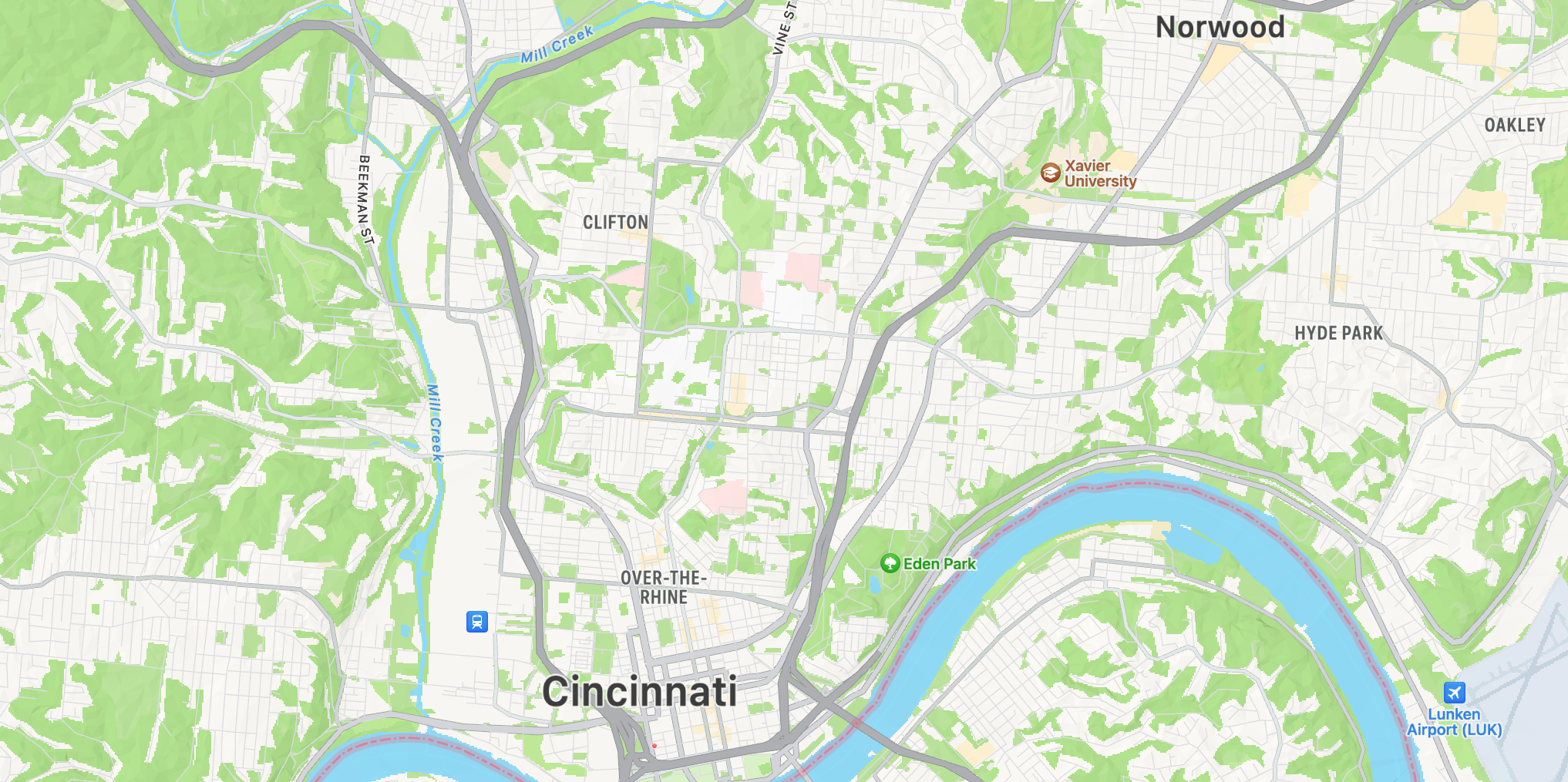
I am currently employed at a fantastic agency down in Cincinnati, Ohio named Barefoot Advertising. Over the past year or so since I have been here, the partners and creatives have been laying the groundwork for a revised positioning in the market. The new positioning is simply–happiness. Why not? Why be unhappy. The majority of our work is advertising new and existing products for companies like Proctor & Gamble and Miller Brewing Company. Getting happy about cool beer brands is not hard to do. Some of these brands have a very very loyal following. A lot of the products we create marketing materials for are used every single day. Believe it or not, people get pretty fanatical about their Swiffers.

So it’s pretty simple, we take on projects where the product or idea that we are helping to advertise makes us, or at least the target audience happy. Simple. And that is a lot of the thought that went into our new Web site which launched yesterday afternoon. The creative is fantastic, not overly Flashy. We’ve integrated a company blog so we can post about new and defining things in our life. Watch that space for some insight into Barefoot happiness. Also, we have some open positions right now, so go check those out. One in-particular, the .NET developer, will be working with me very often. Go check out the new site at: http://www.thinkbarefoot.com.

Dec

11

We are testing a new site today and I discovered that the homepage was crashing Firefox 2.0. Nothing unusual about the page, pretty simple XHTML, using SWFObject to embed a Flash object. Nothing out of the ordinary. So first thought was comment out SWFObject. The issue went away and I could load the page. But what gives. Using SWFObject in other pages doesn’t crash Firefox 2.0?

So another thought, maybe it’s an extension I have installed. I started disabling them one by one. Finally, I found it. The Extended Statusbar extension was crashing Firefox. I could reproduce it 100% of the time. Why it does on this page and not others has yet to be determined. I am going to try and email the team and they can look into it. I am surprised that extensions have enough power to crash the app. Perhaps this is where all of my Firefox 2.0 troubles have come from. I like the browser and the functionality it provides but 2.0 has been shaky to say the least on OS X for me. I’m back to using Safari as my default for now.

UPDATE: looks like quite a few others have discovered the problem and posted comments on the extensions page on the Mozilla site. Hopefully this post will help people when searching for the problem of Flash crashing Firefox 2.0.

Dec

11

Mobile 2.0, really?

December 11, 2006 | 2 Comments

Read/Write Web has a fantastic article on the evolution of Mobile data services. Not sure I agree with the name Mobile 2.0. Maybe it’s semantics, but I feel like we are still striving for Mobile 1.0. Sure we have SMS, and Opera has some Web 2.0 goodness in their browser, but I don’t see a large adoption in the enterprise, other than mobile email. And the majority of mobile phone users (at least in the US) are still using their phone for voice only. Just saw another report titled “mobile data consumption adoption still sluggish.” I feel like the data services need to evolve at least one more cycle before they are compelling enough for user’s to really want them, and that means pay for them.

Which leads to a very great point made in the article about Carriers joining the Fray. Soon, I think the US carriers are going to start to advertise plans tied to data services. MVNOs are starting the cycle and carriers will soon follow. At that point when users are engaged and using the services we can call it Mobile 2.0 I guess.

I agree with a lot of what is said in the article, it really is a great article and has some fantastic links and comments, but I don’t think I agree that we are at a place yet where we can call Mobile 1.0 a sure thing.

Dec

11

Fort Wayne has a relatively new store, which caters to runners and other athletes called Three Rivers Running Company. Yesterday I stopped in to check it out. It won’t be the last time I go there I am sure. I’ve been having some knee pain and was convinced it was the Nike shoes I was running in. I had stopped wearing them and switched to some older New Balance about two weeks ago and the knee pain was starting to get better. So, yesterday I decided to go see the professionals and really find out what I should be running in, clearly shoes make a bid difference.

I walked in and was immediately greeted by a salesperson (whose name I am unaware of) and told him my ’story.’ He immediately took me over and put me in some moderate shoes and then on a treadmill. He filmed me (actually my feet) while doing some light running and was able to figure out why my shoes were causing me pain. Apparently the Nike shoes were the worst thing I could have been wearing. He quickly found some shoes that fit my running type (supinator). I tried on three pair. I settled on a pair of Brooks and right after leaving the store went over to the Parkview Y and gave them a testing on the track. Did a quick 3 miles and left with very little pain in my knee. So far the shoes are working. I’ll continue to test them out, but so far I am very grateful for the help given at Three Rivers Running Company.

Besides the diagnosis, the shoes ended up being less than if I would have walked into a large retail chain and purchased Nike or New Balance. Also while I was there, the two gentleman working there offered up advice on stretching for my knee problems as well. They were a great help and certainly won my repeat business. If you are in the area and do any exercising, especially running, I highly recommend them. Very knowledgeable, and a great atmosphere.

Linkroll

Recent Projects